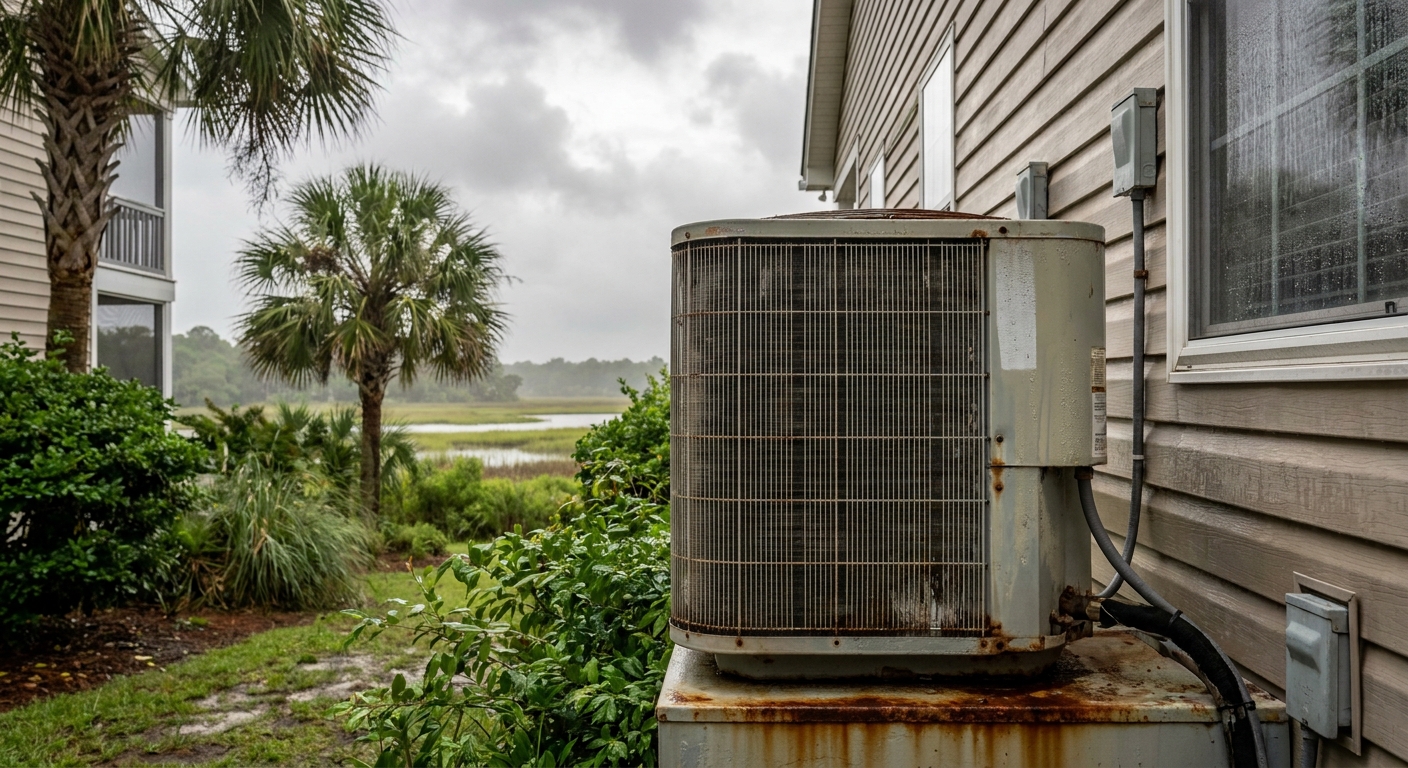



Could Your HVAC Filter in Murrells Inlet Be Causing Higher Energy Bills?
Most homeowners think HVAC filters are just about dust. Trap the gunk, toss it monthly, move on. But your energy bill tells a different story — and if you're ignoring it, you're bleeding money every cycle. Filters don't just sit there catching particles. They control how hard your system has to fight for every degree of cooling. And when that filter clogs up, your AC doesn't coast. It grinds.
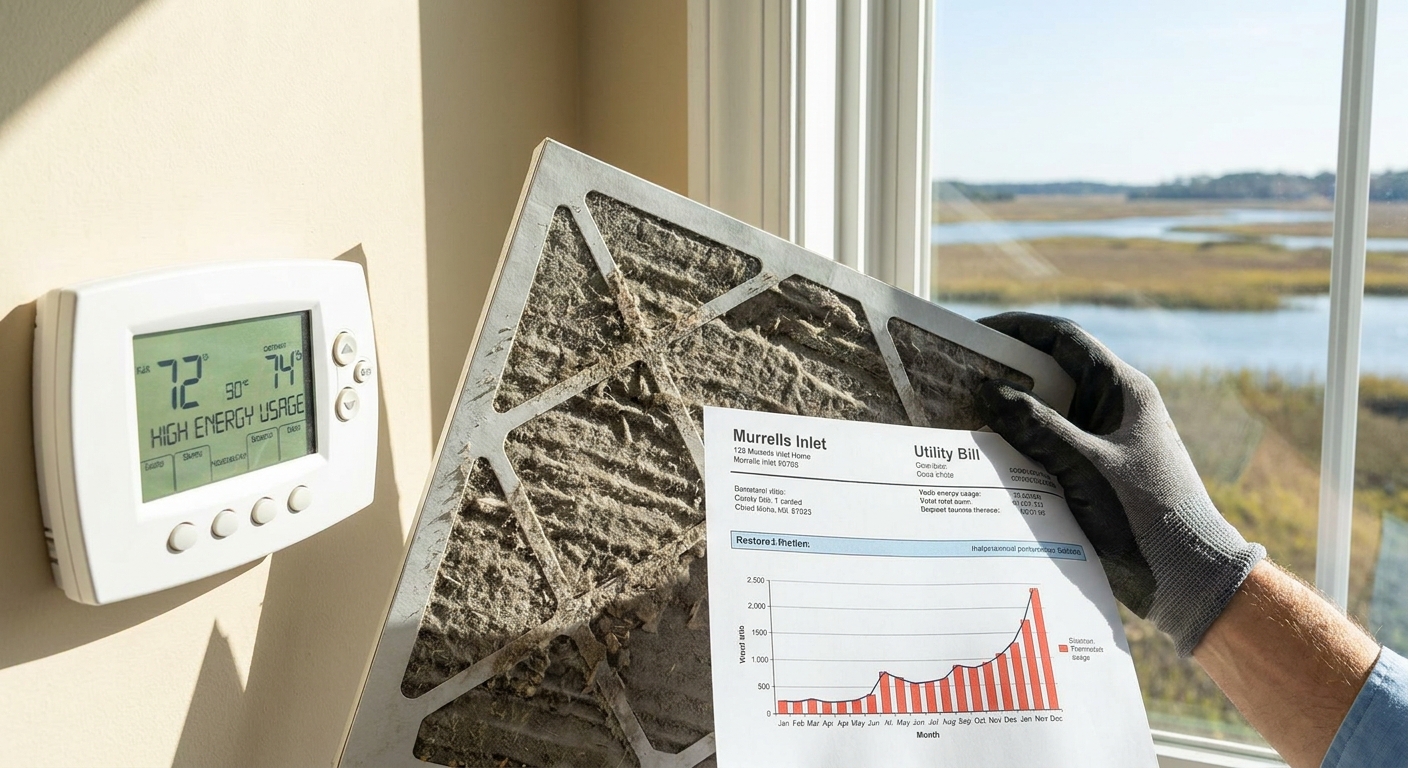
So here's what matters. A dirty filter forces your blower to push harder, your compressor to run longer, and your utility meter to spin faster. Every month you skip changing it is another month you're paying for inefficiency. And in Murrells Inlet, where humidity sits heavy and systems run nonstop from May through September, that inefficiency compounds fast.
Airflow Gets Strangled Before You Notice
Your filter's job is simple on paper. Catch dust, pollen, dander — anything that might foul up your coils or ducts. But as it does that job, it builds up resistance. The more particles it traps, the harder it becomes for air to pass through. Eventually, your system is sucking wind through what feels like a wool blanket.
That restriction doesn't just slow things down. It makes your blower motor work overtime. More runtime means more electricity. More strain means more wear. And if the filter gets bad enough, your system starts short-cycling or overheating, which is when the real damage begins. The Department of Energy puts it bluntly — swapping a clogged filter for a clean one can cut your cooling costs by up to 15 percent. That's not pocket change when your AC is running six months straight.
What Happens When the System Can't Breathe
When airflow drops, your HVAC doesn't just slow down. It compensates. The blower runs longer. The compressor kicks on more often. Rooms that used to cool evenly start feeling sticky. And your thermostat keeps calling for more cycles because the system can't hit its target efficiently.
Here's what we see in homes where filters get ignored:
- Electric bills that jump 10 to 20 percent without any change in usage patterns
- Weak airflow from vents, especially those farthest from the air handler
- Hot spots in bedrooms or upper floors that never cool down properly
- Dust settling on furniture faster than it used to
- The system running constantly but never quite keeping up
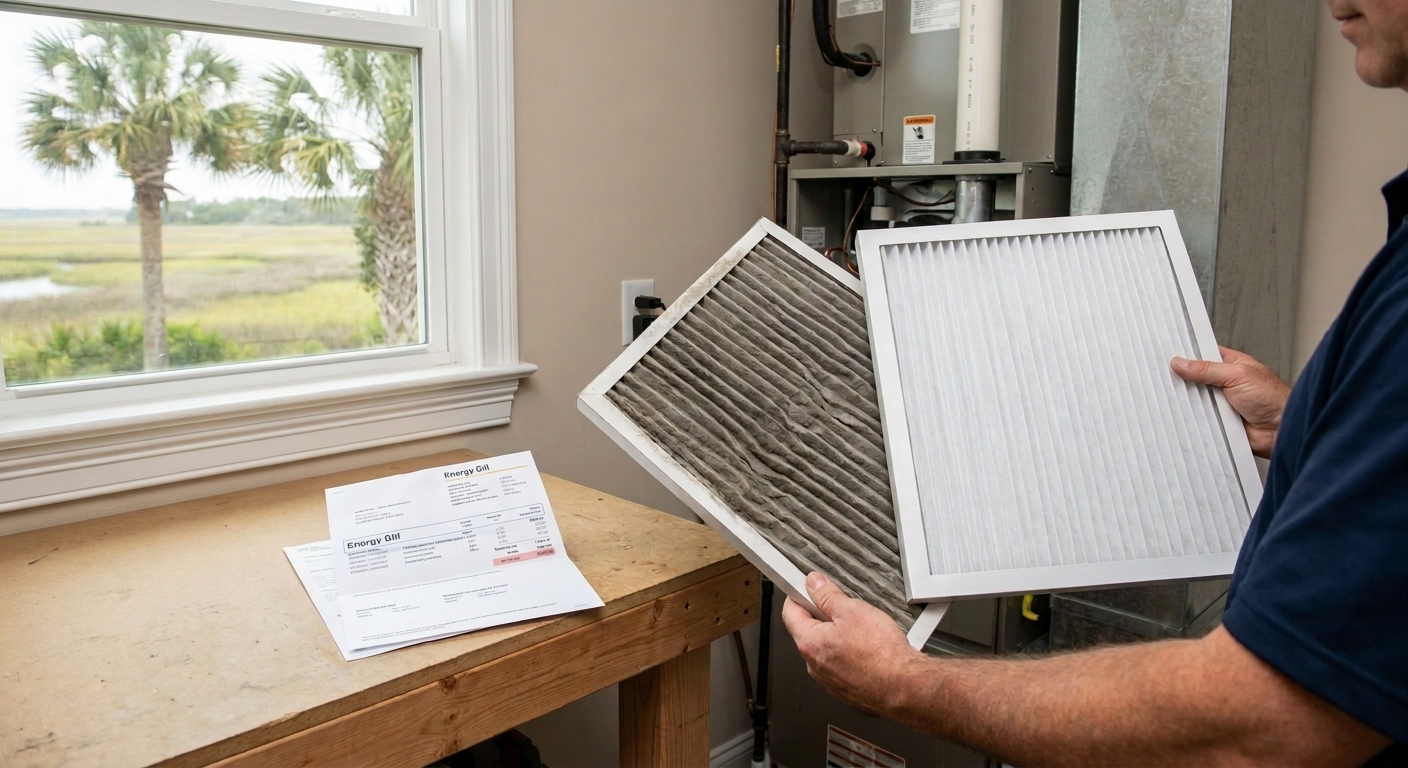
If any of that sounds familiar, pull your filter and hold it up to the light. If you can't see through it, it's done.
Replacement Schedules Aren't Suggestions
Filter manufacturers print a timeline on the box. One month, three months, six months — it varies. But those numbers assume average conditions. If you've got pets, if pollen counts spike in spring, if your house sits near a construction site or dirt road, that timeline shrinks. Fast.
In Murrells Inlet, where salt air mixes with coastal humidity and seasonal pollen, filters take a beating. We recommend checking yours every 30 days during peak cooling season. Pull it out. Look at it. If it's gray or brown, swap it. If it's still white or light tan, you've got another month. Don't wait for the system to tell you — by then, you've already paid the price.
Not All Filters Are Built the Same
Walk into any hardware store and you'll see a wall of filter options. Cheap fiberglass ones. Pleated ones. HEPA-rated ones. They all fit the slot, but they don't all perform the same way. The difference comes down to MERV rating — a scale that measures how well a filter traps particles.
Higher MERV ratings catch more stuff, which sounds great until you realize they also restrict airflow more. If your system wasn't designed to handle a MERV 13 filter, forcing one in can backfire. You'll get cleaner air, but your blower will labor harder and your energy costs will climb. Most residential systems do fine with a MERV 8 to 11. Anything above that, check your manual or call a tech before you buy.
Symptoms That Point to Filter Problems
Your HVAC system won't send you a text when the filter's clogged. But it will give you clues if you're paying attention. These are the red flags we hear about most often:
- Utility bills climbing even though you haven't changed your thermostat settings
- Rooms that used to stay cool now feel muggy or uneven
- Dust buildup on shelves and baseboards happening faster than normal
- The system cycling on and off more frequently without holding temperature
- A musty smell coming from the vents when the AC kicks on
Any one of these is worth investigating. Two or more, and you're almost certainly looking at a filter issue — or worse, damage that started because a filter got neglected.
Other Efficiency Drains Worth Checking
Filters are low-hanging fruit, but they're not the only thing that impacts your energy bill. If you've already swapped your filter and the costs are still high, start looking at the rest of the system. Leaky ducts bleed cooled air into attics and crawl spaces. Dirty coils reduce heat transfer. An aging thermostat might be calling for cooling when it doesn't need to.
Here's what else we tell homeowners to tackle:
- Schedule annual HVAC maintenance so a tech can catch wear before it turns into failure
- Seal gaps around windows and doors where conditioned air escapes
- Install a programmable or smart thermostat to avoid overcooling empty rooms
- Clear debris from around your outdoor condenser unit
- Check insulation levels in your attic, especially if your home was built before 2000
None of these fixes are glamorous. But they're the difference between paying for comfort and paying for waste.
When DIY Stops Being Enough
Changing a filter is something most people can handle. But if you've done that and your bills are still climbing, it's time to bring in a pro. A trained technician can measure airflow, check refrigerant levels, inspect ductwork, and spot issues that don't show up on a homeowner's radar.
We've worked with plenty of Murrells Inlet homeowners who thought they had a filter problem, only to find out their ducts were leaking or their coils were iced over. Filters matter, but they're just one piece of a bigger system. And when that system isn't running right, guessing costs more than getting it checked.
Documentation Backs Up Every Service Call
If you're calling a technician, ask for a written report. You want to know what was checked, what was found, and what was done. Not just for your records, but because patterns matter. If your filter is clogging every three weeks instead of every three months, something upstream is feeding that problem. Could be duct leaks. Could be a return vent pulling in attic dust. Either way, documentation helps you connect the dots.
Here's what a solid service report should include:
- Filter condition and replacement date
- Airflow measurements at key points in the system
- Refrigerant pressures and temperatures
- Visual inspection notes on coils, blower, and ductwork
- Recommended follow-up actions with timelines
If your HVAC company isn't giving you that level of detail, find one that does.
Small Fixes Prevent Big Bills
Ignoring your HVAC filter doesn't just cost you a few extra dollars on your electric bill. It shortens the lifespan of your equipment, forces repairs that could have been avoided, and makes your home less comfortable in the meantime. There's no upside to letting it slide.
We've seen too many Murrells Inlet homeowners wait until something breaks before they start paying attention. By then, the damage is done. Compressors burn out. Blowers seize. Coils freeze and crack. And what could have been a $20 filter swap turns into a $3,000 repair bill. The filter isn't glamorous, but it's the easiest line of defense you've got. Check it. Change it. And keep your system running the way it was designed to — efficiently, quietly, and without surprise costs showing up every month. Regular maintenance and filter changes can help prevent the hidden costs of delaying repairs in coastal homes. If you're experiencing problems with humidity management affecting your HVAC function, addressing filter issues is a smart first step.
Let’s Keep Your Comfort Costs Down
Staying ahead of HVAC filter issues is one of the simplest ways we can keep our homes comfortable and our energy bills in check. If you’re ready to stop guessing and want a team that knows how to spot the real problems, let’s talk. Call us at 843-504-5974 or schedule an appointment and we’ll help you get your system running at its best, season after season.
‹ Back
Recent Posts
-
Is Your Air Conditioner in Myrtle Beach Blowing Warm Air?
October 2, 2026
-
Can Dirty Air Ducts in Pawleys Island Affect Your Indoor Air Quality?
September 18, 2026
-

Is It Time to Replace Your Thermostat in Myrtle Beach?
September 4, 2026
-
-