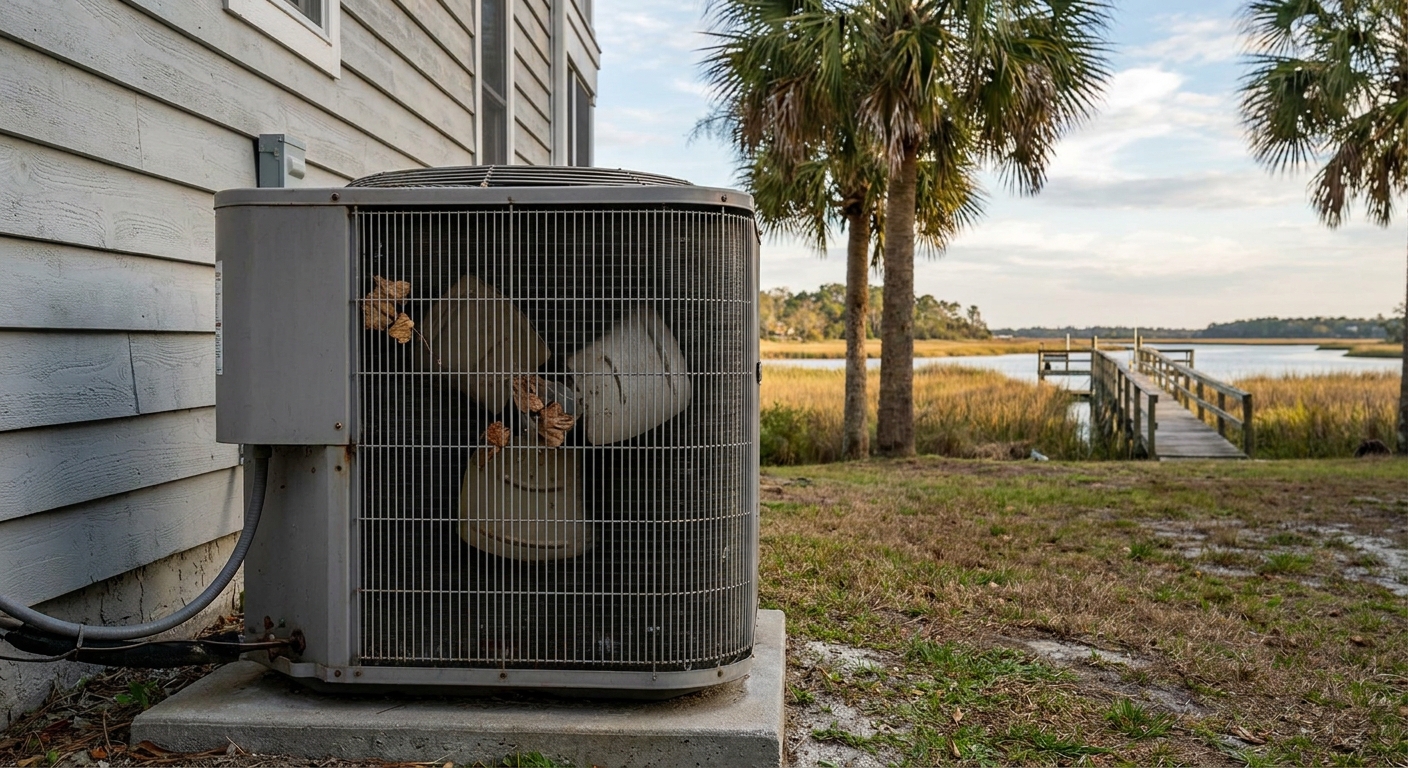



Do Older HVAC Systems in Murrells Inlet Handle Humidity Well?
Most homeowners think HVAC systems are just about temperature. Hot or cold. Comfortable or miserable. But coastal living demands more than that — and if your system isn't built for it, you're fighting a losing battle. Humidity doesn't just make you uncomfortable. It rots wood, breeds mold, and turns your home into a petri dish. Especially when your equipment is running on borrowed time.
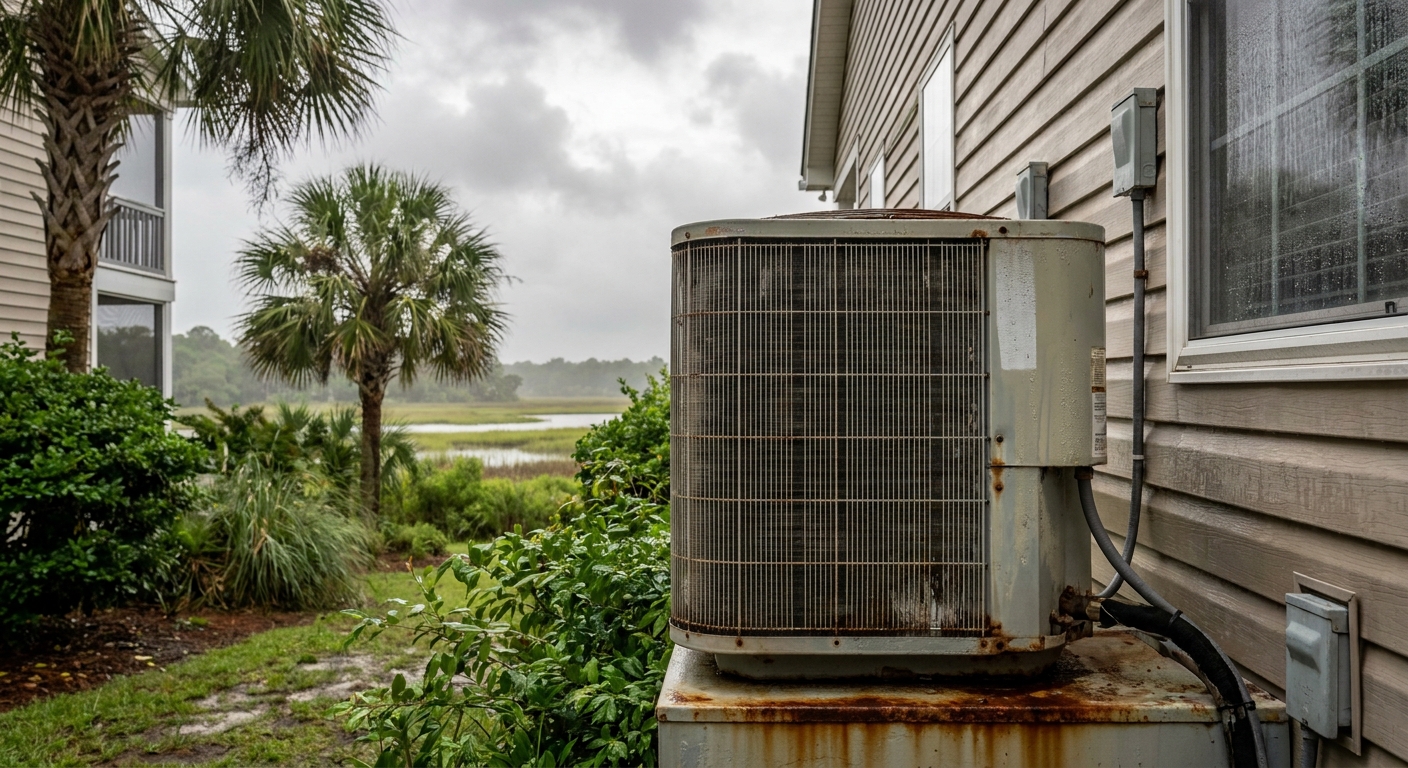
So here's the reality. If you're relying on a system that's been hanging on for 15 years, that's fine — until it's not. Age doesn't disqualify a unit outright. But when the coils are caked, the compressor's sluggish, and the thing barely runs long enough to pull moisture out of the air, you're past maintenance and into replacement territory. Every summer should feel the same indoors. If it doesn't, your system isn't doing its job.
Why Moisture Control Matters More Than You Think
Humidity isn't just sticky air. It's the reason your baseboards warp, your closets smell like mildew, and your allergies flare up every spring. In a place like Murrells Inlet, where the air holds water like a sponge, controlling indoor moisture isn't optional. It's survival. Your HVAC system either handles it, or everything else in your home starts breaking down.
When an air conditioner runs, it pulls heat and moisture out of the air by condensing water vapor on cold coils. That's how dehumidification happens. But if the system cycles off too fast, or the coils are fouled, or the airflow is weak, that moisture just sits there. And sitting moisture becomes mold, rust, and repair bills you didn't budget for.
Older Systems Weren't Built for This Climate
HVAC technology has evolved fast over the last decade. Units installed in 2010 don't have the same features as what's available now. Variable-speed compressors, advanced airflow management, humidity sensors — these aren't luxuries anymore. They're standard. And if your system predates them, it's working twice as hard to do half the job.
Here's where older systems fall short:
- They lack variable-speed fans that adjust to humidity levels in real time
- Their coils corrode faster in salty coastal air, reducing efficiency
- They cycle on and off too quickly to remove enough moisture
- Their refrigerant may be outdated or leaking, which kills performance
- They weren't sized correctly to begin with, leading to chronic issues
Oversized Units Create Their Own Problems
Bigger isn't better when it comes to HVAC. An oversized system cools your home fast — then shuts off before it can pull humidity out. You end up with a cold, clammy house that feels worse than if you'd left the windows open. This is one of the most common mistakes in sizing HVAC systems, where contractors guessed at capacity instead of running proper load calculations.
If your system runs in short bursts and never seems to reach a steady state, that's a red flag. The air might drop to 72 degrees, but if it's sitting at 65% humidity, you're not comfortable. You're just cold and damp. And your system is burning energy without solving the real problem.
What Happens When Maintenance Gets Ignored
Want your system to control humidity? Keep it clean. Dirty coils can't transfer heat efficiently. Clogged filters choke airflow. Blocked condensate drains back up and flood your air handler. Every one of these issues makes your system worse at removing moisture — and every one of them is preventable.
We've seen units that haven't had a service call in five years. The evaporator coil looks like it's been dipped in concrete. The blower wheel is crusted over. The drain pan is a science experiment. At that point, it doesn't matter how good the system was when it was new. It's not functioning anymore. And expecting it to manage humidity is like asking a clogged vacuum to deep-clean carpet. Regular HVAC maintenance prevents these failures before they happen.
Red Flags That Your System Is Losing the Fight
You don't need a technician to tell you something's wrong. Your home will show you. If you're noticing any of these, your HVAC isn't controlling moisture the way it should:
- Musty odors that won't go away no matter how much you clean
- Condensation forming on windows, mirrors, or walls
- Visible mold spots in corners, closets, or around vents
- Warped door frames or baseboards that won't stay flush
- Air that feels sticky even when the thermostat says it's cool
Dehumidifiers Can Buy You Time
If replacing your HVAC isn't in the budget right now, a whole-home dehumidifier can bridge the gap. These units work alongside your air conditioner to pull moisture out of the air more aggressively. They're not a permanent fix, but they can make a failing system livable for another season or two.
Just don't expect a portable unit from the hardware store to solve the problem. Those are fine for a basement or a single room. But if you're trying to control humidity across 1,800 square feet in South Carolina summer, you need something ducted and properly installed. Otherwise, you're just moving the problem around.
When Upgrading Makes More Sense Than Repairing
There's a point where throwing money at an old system stops making sense. If your unit is over 12 years old, uses R-22 refrigerant, and needs a major repair, you're better off replacing it. Modern systems are more efficient, quieter, and built to handle humidity in ways older models can't touch.
Here's what newer systems bring to the table:
- Variable-speed compressors that adjust output based on real-time conditions
- Multi-stage cooling that runs longer at lower speeds to pull out moisture
- Smart thermostats that monitor humidity and adjust automatically
- Improved coil designs that resist corrosion in coastal environments
- Energy efficiency that cuts your bills by 20-40% compared to older units
Maintenance Isn't Optional in This Climate
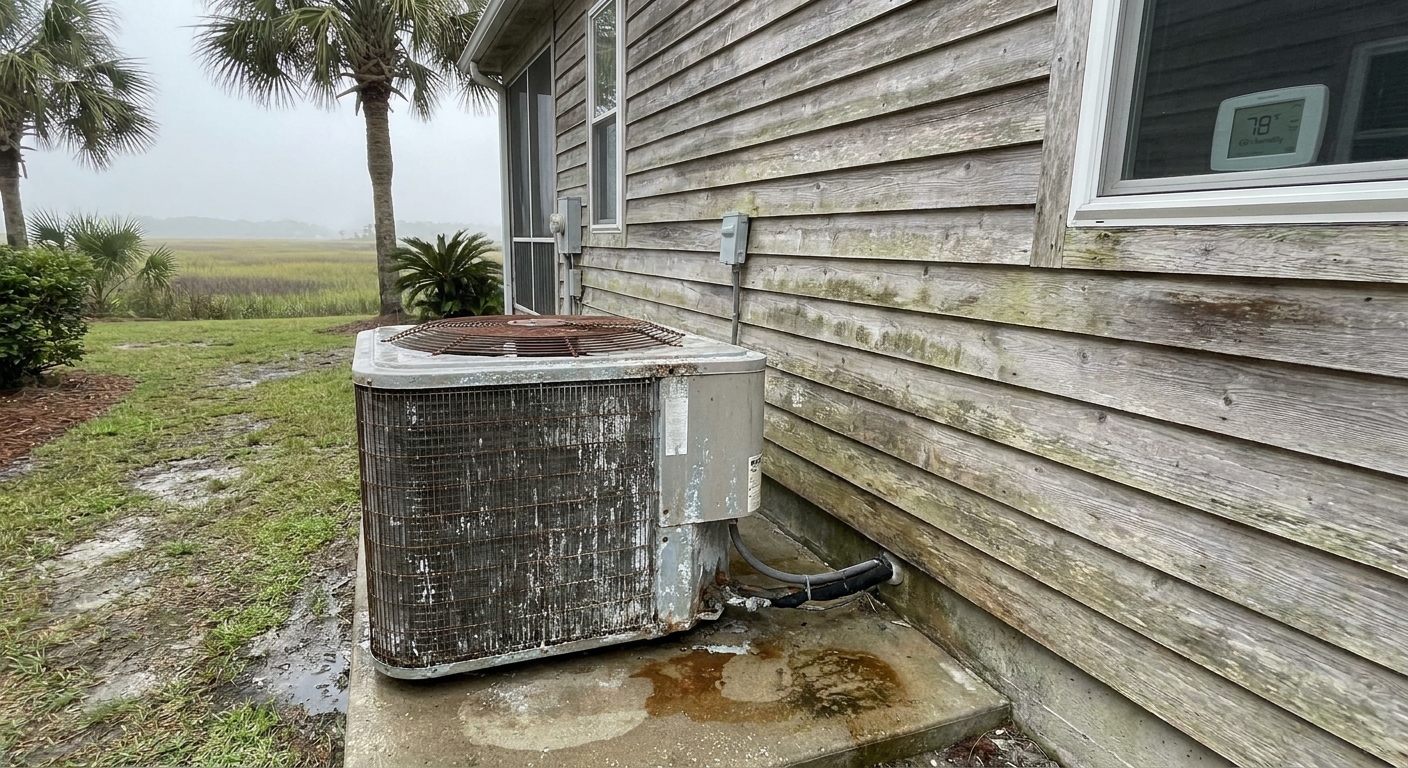
Even the best system will fail if you ignore it. Coastal air is rough on HVAC equipment. Salt, sand, and moisture accelerate wear on every component. That means filters need changing more often. Coils need cleaning twice a year, not once. And condensate lines need flushing before they clog and overflow.
Most HVAC failures we see aren't because the equipment was bad. They're because nobody touched it for three years and then acted surprised when it quit in July. Preventive HVAC maintenance costs a fraction of emergency repairs. And it keeps your system running efficiently enough to actually manage humidity instead of just pushing air around. Understanding how coastal weather impacts HVAC installation choices helps you make smarter decisions about maintenance schedules.
Get Ahead of the Problem Before It Gets Ahead of You
Humidity damage doesn't announce itself. It creeps in slowly, then hits hard. By the time you see mold or smell mildew, the problem's already entrenched. Your HVAC system is your first line of defense — but only if it's up to the task. If your unit is aging out, running poorly, or just never handled moisture well to begin with, waiting won't make it better. Learning to recognize the top causes of HVAC problems can help you act faster.
Call in a professional who knows coastal systems. Get an honest assessment of what you're working with. And if the answer is that your system can't keep up, make the call before the next heat wave rolls in. Because once the humidity takes hold, getting it back out is ten times harder than keeping it out in the first place.
Let’s Make Your Home Comfortable Again
We know how frustrating it is to battle humidity with an HVAC system that just can’t keep up. Let’s work together to restore comfort and protect your home from the coastal climate. If you’re ready for real solutions, give us a call at 843-504-5974 or schedule an appointment and let’s get your home back on track.
‹ Back
Recent Posts
-
Can Dirty Air Ducts in Pawleys Island Affect Your Indoor Air Quality?
September 18, 2026
-

Is It Time to Replace Your Thermostat in Myrtle Beach?
September 4, 2026
-
-
-